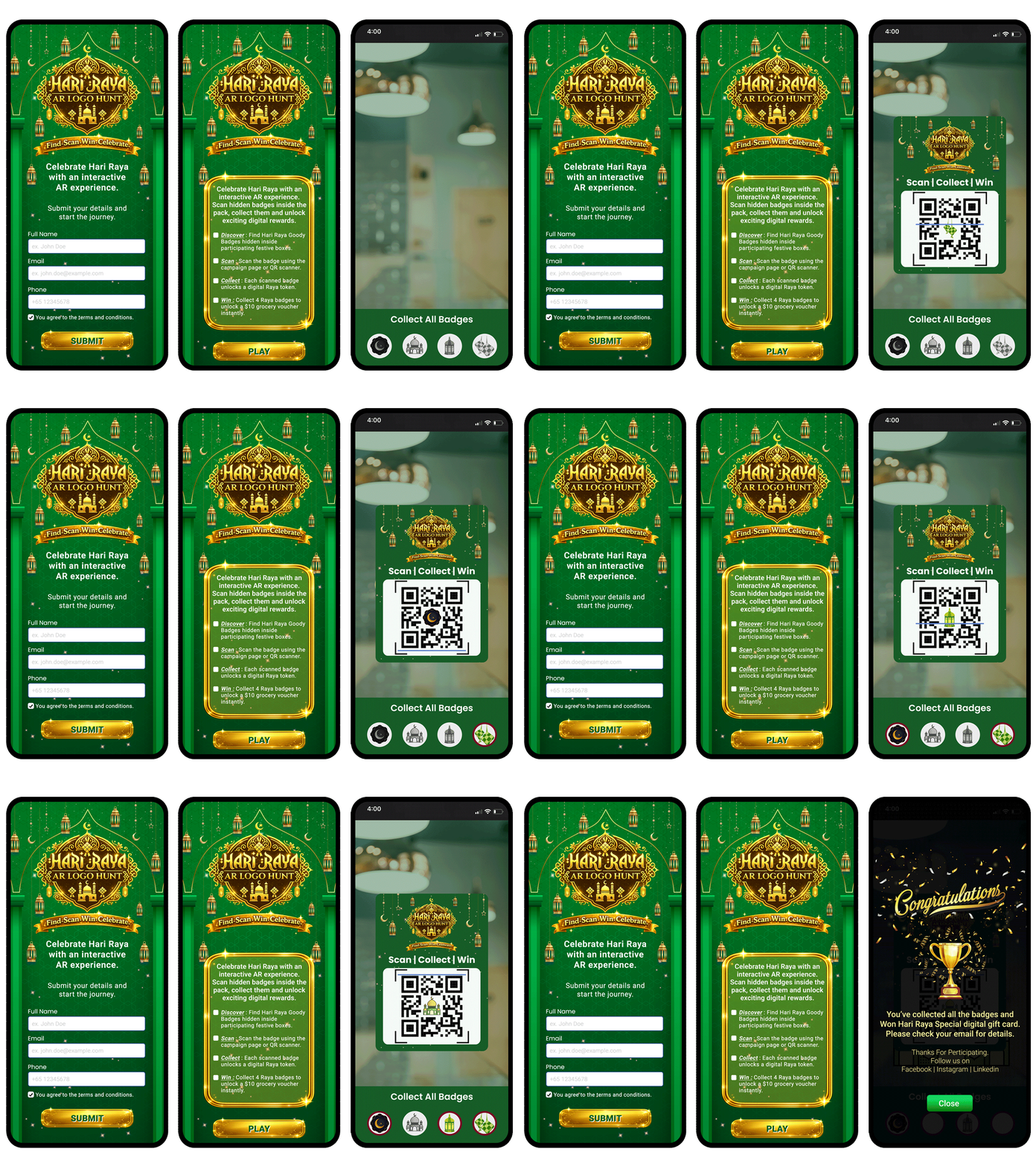
Customer relationship management (CRM) is no longer just about storing customer names, contact details and purchase history.
For modern marketers, the real value of customer data lies in what you can do with it.
The right customer data can help businesses create more relevant campaigns, personalise offers, encourage repeat purchases and build stronger relationships. Add rewards and gamification to the mix, and CRM marketing can become much more effective.
This is where incentive-led CRM marketing can make a difference.
Whether you are looking to acquire new customers, increase engagement, drive repeat purchases, or bring inactive customers back, here are 11 practical CRM marketing ideas you can use.
What Is CRM Marketing?
CRM marketing is the use of customer information and behavioural data to create more relevant and targeted marketing campaigns.
Instead of sending the same promotion to everyone, businesses can use information such as:
- Purchase history
- Campaign participation
- Customer preferences
- Engagement behaviour
- Previous incentives issued or redeemed
This information can then be used to trigger personalised communications, offers, rewards and experiences.
For example, instead of sending every customer a generic “20% off” promotion, a retailer could identify customers who have participated in a particular campaign at a location and offer them a targeted reward to encourage a return visit.
The objective is simple
Use customer data to make marketing more relevant and give customers a reason to engage.
11 CRM Marketing Ideas to Drive Customer Engagement
1. Welcome New Customers With an Instant Reward
The first interaction after customer registration is an opportunity to create a positive impression.
Instead of simply thanking customers for signing up, give them an immediate reason to engage.
Example:
A beauty retailer collects a customer’s name, email and product preferences during registration.
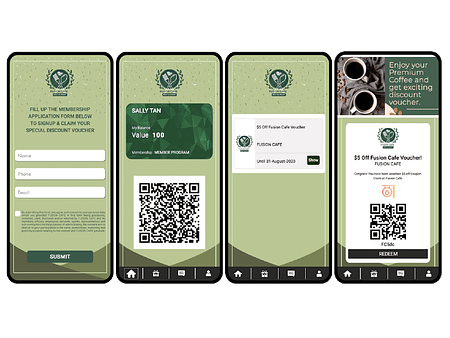
Immediately after signup, the customer receives a digital voucher for 10% off their first purchase.
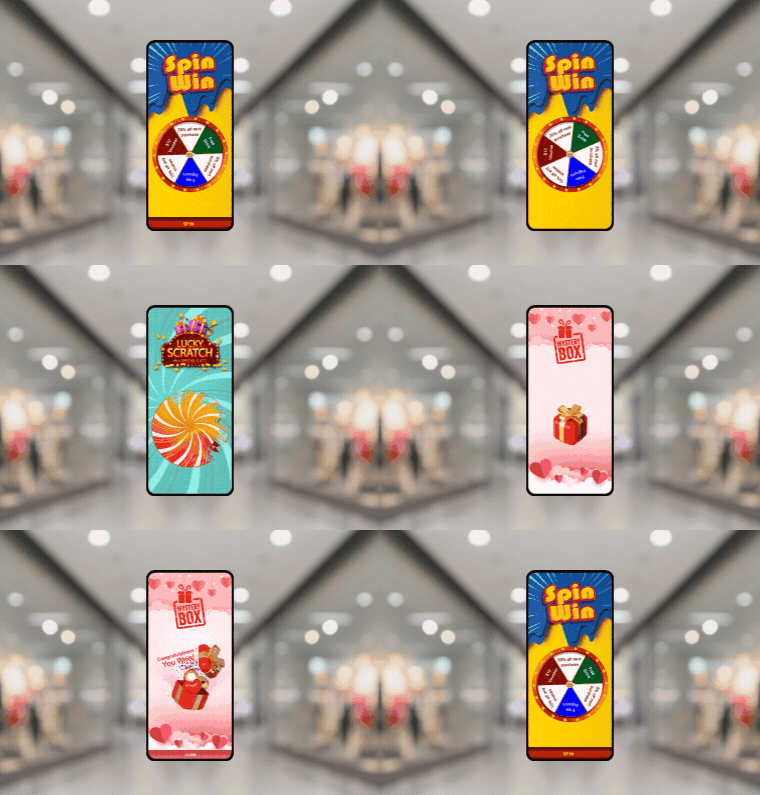
You can take this further by adding a simple Spin & Win experience where customers unlock one of several rewards.
Why it works:
The customer gets an immediate benefit while the business captures useful customer data and creates a first engagement.
2. Reward the First Purchase
Getting someone to register is only the first step. The next challenge is converting that customer into a paying customer.
Use CRM data to identify customers who have registered but have not yet engaged with the brand.
Example:
A fashion retailer identifies customers who have registered as for free membership but have not redeemed the welcome reward.
The retailer sends them a game link to play a branded game:
“Catch gold coins. The more you catch the more you win!
Free Delivery Vouchers and discount vouchers worth $88 to be won. Click below to play “
The reward can have an expiry date to create urgency.
Why it works:
It turns customer data into a specific action: play→ incentive → first purchase.
3. Create Personalised Birthday Rewards
Birthdays are an easy opportunity to create a more personal customer experience.
Capture date of birth as a part of marketing engagement tactics or as a part of membership registration and use it to trigger automatic birthday campaigns.
Example:
Seven days before a customer’s birthday, send: “Happy Birthday! Here’s your birthday Angbao from us”
The customer receives link to open the Angbao & reveal the reward.
The reward could be:
* $10 voucher
* Free product
* Free upgrade
* Bonus loyalty points
* Mystery reward
Why it works:
The campaign feels personal rather than promotional.
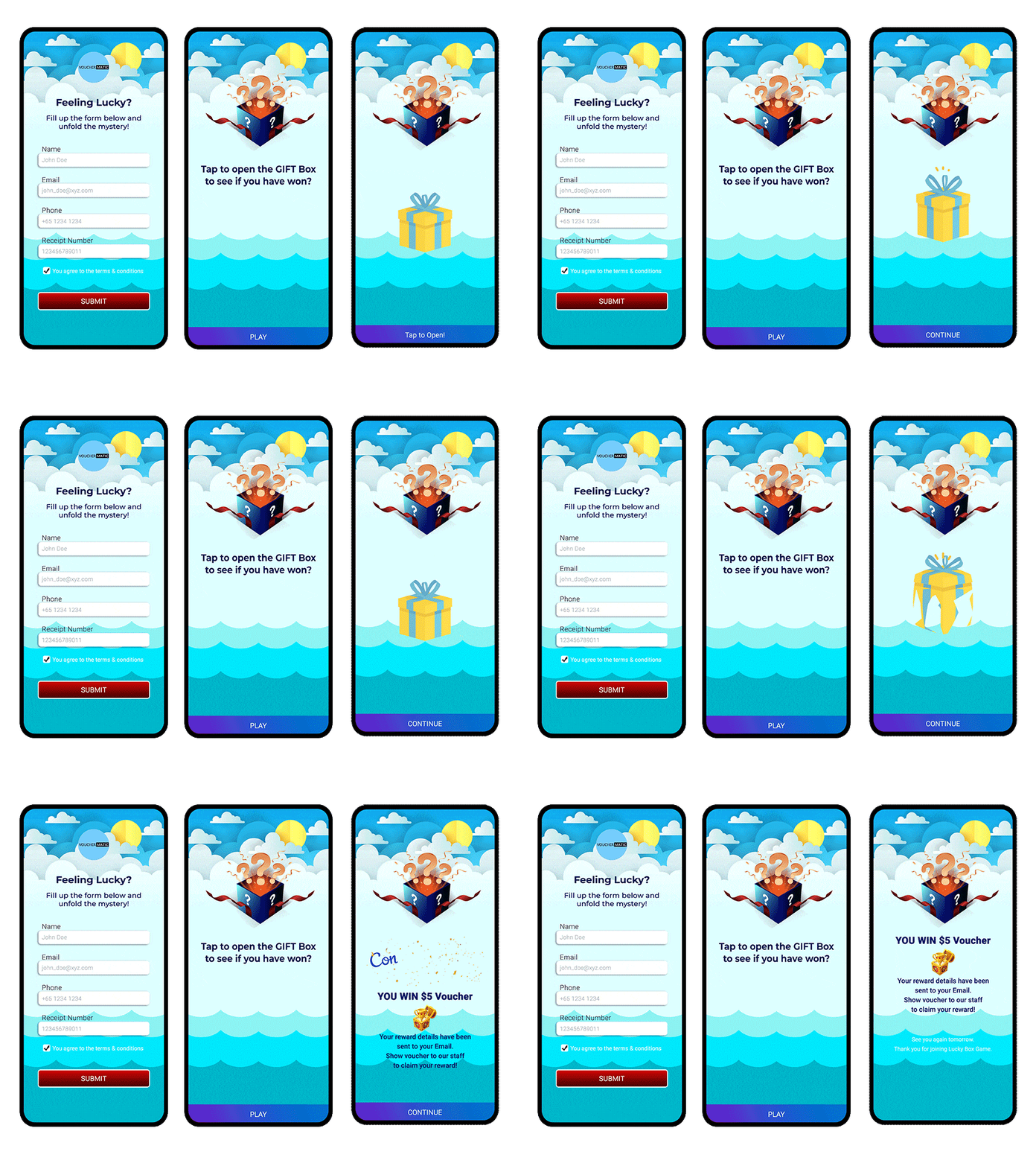
4. Use Customer Behaviour History to Trigger Targeted Offers
Customer engagement data can reveal how and where customers are engaging with your brand — and when they may be ready to buy.
Instead of sending broad promotions, use engagement &/or purchase behaviour to create targeted campaigns.
Example:
A skincare brand identifies customers who redeemed a cleanser voucher three months ago.
The business sends them a targeted campaign offering a reward on their next skincare purchase.
Another customer who regularly buys premium products could receive a different offer.
Why it works:
The campaign is based on customer behaviour rather than guesswork.
5. Re-Engage Customers With a Win-Back Campaign
Not every customer who stops purchasing has permanently churned.
Sometimes customers simply need a reason to return.
Use CRM data to identify customers who have not interacted or purchased within a defined period.
Using Vouchermatic you can push bulk incentives to these customers.
Example:
Customers who have not made a purchase for six months receive:
“We haven’t seen you in a while. Here’s a reward to welcome you back.”
You could make the campaign more engaging by allowing customers to choose or unlock their reward using “Pick-A-Box style UI”.
For example:
Pick your reward:
$10 voucher
Free delivery
15% off
Mystery reward
Why it works:
The incentive gives inactive customers a reason to re-engage while the interactive element adds curiosity.
6. Turn Customer Feedback Into a Rewarded Experience
Customer surveys often suffer from low participation.
Instead of simply asking customers to complete a survey, make participation rewarding.
Example:
After a purchase, customers see a short feedback survey QR code on receipt or invoice.
After completing it, they unlock a $10 discount to redeem online
The business gets valuable customer feedback while the customer receives something in return.
Why it works:
It changes feedback from a task into an experience.
7. Use Gamification to Increase Campaign Participation and Build Customer 360 Data
Gamification can do more than make CRM campaigns more engaging. When designed strategically, mini-games can become a low-friction way to gradually build a richer customer profile over time.
Instead of asking customers to complete a long registration form or provide lots of information upfront, brands can use different campaign interactions to progressively collect customer data while giving customers an immediate reason to participate.
Example:
a retailer could run a series of campaigns where customers can:
- Spin a wheel to unlock a reward
- Open a mystery box after completing a purchase
- Play a simple mini-game to win points or vouchers
- Complete a quiz about their preferences
- Collect digital stamps across multiple visits or events
- Complete a digital scavenger hunt to discover products
- Participate in challenges to unlock higher-value rewards
The important part is that each interaction can contribute another piece of information to the customer profile.
For instance:
Campaign 1:
Customer registers → Name + Email
Campaign 2:
Customer completes a product quiz → Product interests
Campaign 3:
Customer scans a receipt → Purchase/product information
Why it works:
The traditional approach to CRM data collection is often “ask first, provide value later.”
Gamification flips this around:
Give value → encourage participation → capture an interaction → learn something → personalise the next interaction.
8. Turn Repeat Purchases into an Automated Loyalty Loop
Getting a customer to buy once is acquisition. Getting them to come back is where it starts to create real value.
Many loyalty programmes stop at a simple points or stamp system: buy X times, get a reward. While this works, Vouchermatic allows brands to make the experience much more intelligent.
Example:
A café creates a digital stamp campaign:
Purchase 1 → Stamp
Purchase 2 → Stamp
Purchase 3 → Stamp
Purchase 5 → Free reward
You can make this more engaging by showing customers their progress and offering occasional bonus opportunities.
Why it works:
Customers can see how close they are to their next reward, creating a reason to return.
9. Use Quizzes to Collect Customer Data
Sometimes the best way to collect customer information is to make the data collection itself enjoyable.
Interactive quizzes can help businesses gather zero-party data — information customers voluntarily provide about themselves, their preferences or interests.
Example:
A skincare brand creates:
“What’s Your Skin Personality?”
Customers answer five questions and receive a personalised product recommendation.
At the end, they receive a voucher for their recommended product.
The business captures useful preference data while the customer receives something valuable in return.
Why it works:
Customers are more willing to share information when they receive a useful or entertaining experience in exchange.
10. Create Seasonal and Event-Based Campaigns
CRM data does not have to be used only for always-on campaigns.
Seasonal events can create opportunities to reactivate existing customer databases.
Think:
* Chinese New Year
* Valentine’s Day
* Ramadan
* Hari Raya
* National Day
* Christmas
* Black Friday
* Anniversary campaigns
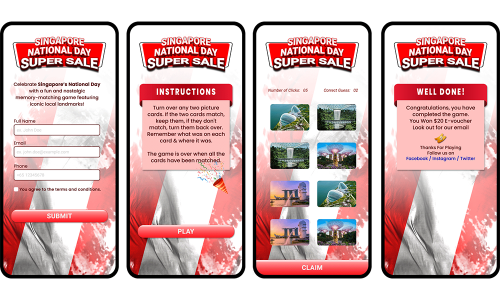
Example:
A retailer sends customers a invitation to participate in a festive Lucky Draw.
Customers who meet a purchase threshold receive an entry.
The campaign can then track participation, prizes issued and redemptions.
Why it works:
It combines a timely marketing message with an attractive/ aspirational reward.
11. Turn One-Time Customers Into Repeat Customers
Ultimately, CRM marketing should help businesses build longer-term customer relationships.
One purchase should not be the end of the customer journey.
Use customer data to create a sequence of relevant post-purchase interactions.
Example:
A customer purchases a product.
The journey could be:
Day 0: Purchase confirmation
Day 7: Product tips or usage content
Day 21: Feedback request + reward
Day 45: Related product recommendation
Day 60: Personalised voucher
Day 90: Loyalty or referral campaign
Instead of treating every customer interaction as a separate campaign, the business creates a connected customer journey.
Why it works:
The customer receives relevant communication at different stages of the relationship rather than repeated generic promotions.
CRM marketing is ultimately about activating customer information.
Businesses need ways to turn customer data into actions:
Customer data → Segmentation → Campaign → Incentive → Engagement → Redemption → Insights
This is where an incentive marketing platform can complement a CRM.
Rather than replacing the CRM, an incentive platform can sit alongside existing customer systems and provide the campaign, reward and gamification layer.
Is Vouchermatic the best CRM marketing Software?
Vouchermatic is not your typical/ traditional CRM system.
It is an incentive marketing platform with CRM-style capabilities designed to help businesses collect customer data, run engagement campaigns and incentivise customer behaviour.
Businesses can use Vouchermatic to:
- Capture customer information through campaign experiences
- Create customer profiles and collect preference data
- Run acquisition and engagement campaigns
- Issue digital vouchers and rewards
- Create gamified experiences such as Spin & Win, Scratch & Win and Mystery Box
- Run loyalty and stamp-card campaigns
- Incentivise referrals and participation
- Track campaign participation and reward redemption
- Connect campaign activity with customer engagement data
This makes it possible to build CRM-style marketing campaigns where customer data is not just stored — it is activated.
From Customer Data to Customer Action
The future of CRM marketing is not simply about having more customer data.
It is about making that data useful.
The most effective campaigns connect three things:
- Data — understand who your customer is and what they do.
- Relevance — use that information to create targeted experiences.
- Incentives — give customers a reason to take the next action.
- Add gamification, and you can turn a standard marketing message into an experience customers actively participate in.
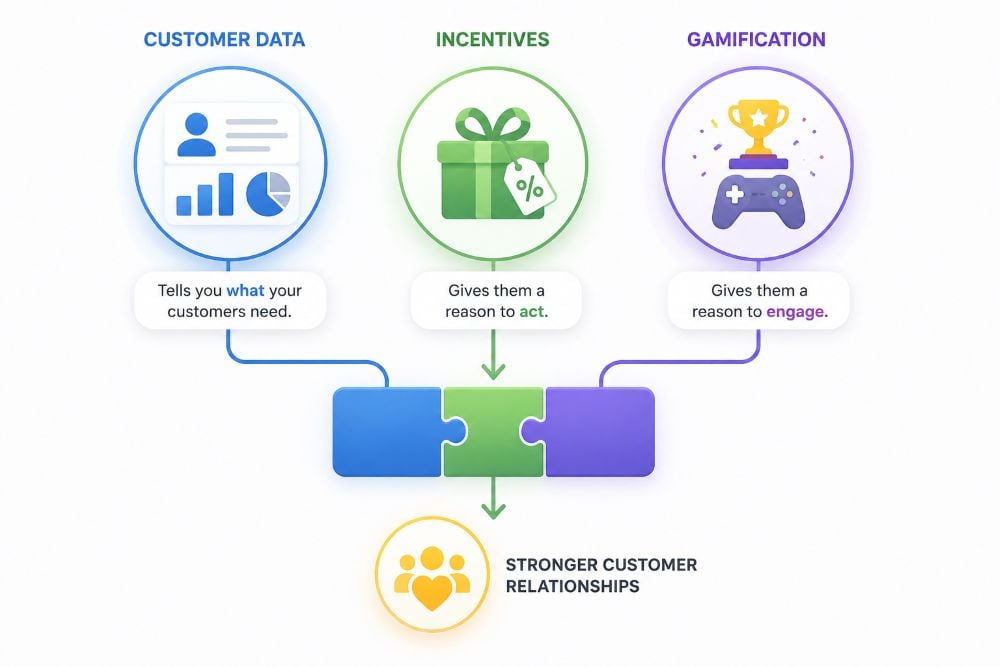
For businesses looking to improve customer acquisition, engagement and retention, this combination can create a more effective approach to CRM marketing.
Customer data tells you what your customers need. Incentives give them a reason to act. Gamification gives them a reason to engage.
That is where modern CRM marketing becomes more than just customer management — it becomes customer activation.
Make Your CRM a Growth Engine
FAQ
Most frequent questions and answers
CRM marketing uses customer data — purchase history, preferences, past redemptions — to trigger personalised offers instead of generic promotions. Traditional CRM focuses on storing customer information; CRM marketing focuses on activating it, turning that data into targeted campaigns, rewards and experiences that drive engagement and repeat purchases.
Effective ideas include instant welcome rewards, gamified first-purchase incentives, personalised birthday rewards, and win-back campaigns for inactive customers. Others include rewarding feedback surveys, using quizzes to collect preference data, digital stamp-card loyalty loops, and seasonal campaigns tied to events like Chinese New Year or Black Friday.
Yes. Vouchermatic is an API-first platform, which means it can be connected with most existing CRM and ecommerce systems rather than requiring you to replace them. It also has a dedicated Shopify integration for real-time e-voucher issuance and multichannel delivery via email and SMS, so businesses can layer campaigns and rewards onto the tools they already use.
Vouchermatic is ISO 27001:2022 certified, holds Singapore’s Data Protection Trust Mark, and is Cyber Essentials and GDPR compliance certified. These certifications cover information security management, data handling practices and cross-border compliance, so integrating your CRM data with Vouchermatic follows recognised international and Singapore data protection standards.